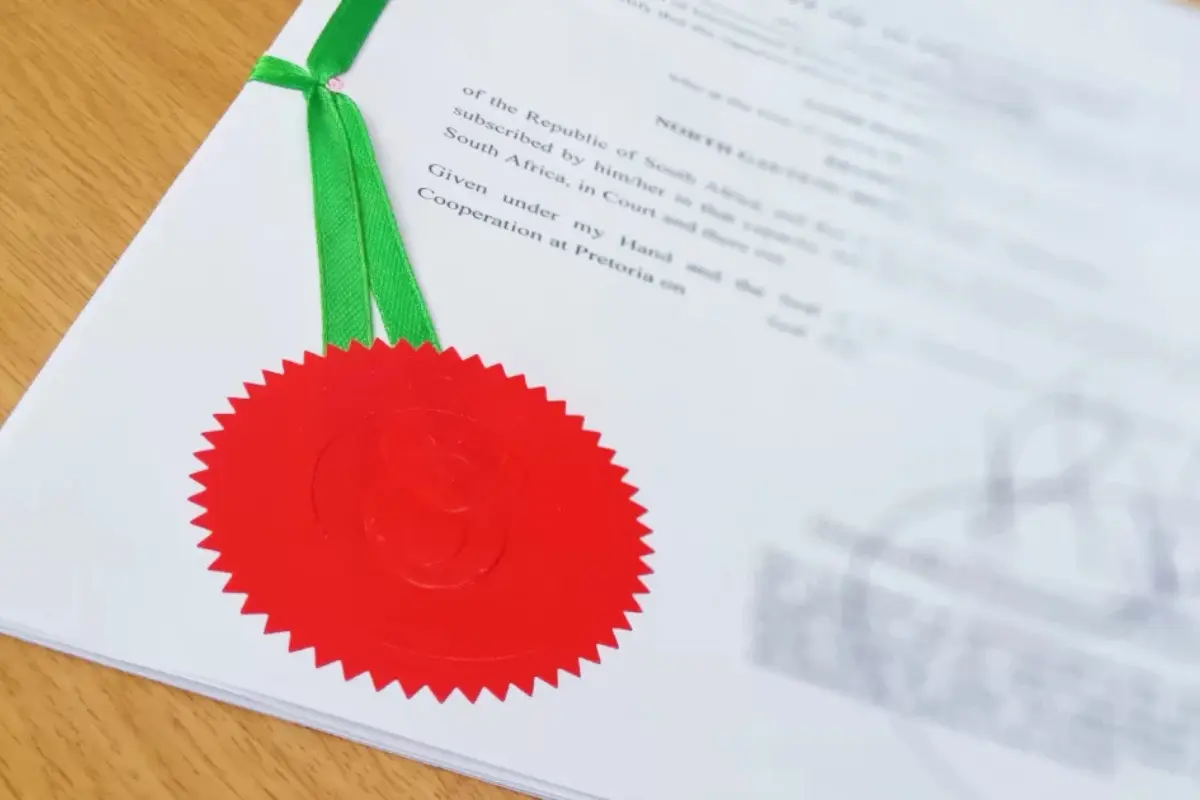
How to Legalize a Document in Kenya: Step-by-Step Guide
If you need to use a Kenyan document abroad, you may be required to have it certified, notarized, authenticated or legalized before a foreign embassy, government authority, university, employer, bank, court or other institution will accept it.
The exact document legalization process in Kenya depends on the type of document, the authority that issued it, the country where it will be used and the requirements of the receiving institution.
Depending on your circumstances, the process may involve:
- Certification of a copy;
- Notarization by a Notary Public;
- Authentication of a notarized document;
- Authentication by Kenya’s Ministry of Foreign and Diaspora Affairs; and/or
- Legalization by the relevant embassy, high commission or consulate.
Because there is no single procedure for every document, it is important to establish the correct requirements before beginning the legalization process.
At WKA Advocates, we assist individuals, businesses, investors and organizations with document certification, notarization, authentication and legalization in Kenya. We can review your document, determine the appropriate process based on its intended destination and assist with the necessary stages.
What Is Document Legalization in Kenya?
Document legalization is the process of formally verifying the authenticity of a document so that it can be recognized and accepted in another country.
Legalization generally does not confirm that everything stated in a document is true. Instead, depending on the procedure, it may verify:
- A signature;
- An official stamp or seal;
- The authority of the person who signed or certified the document; or
- The official capacity in which that person acted.
For example, a Kenyan company may need authenticated corporate documents to open a foreign bank account. Someone relocating overseas may need to authenticate academic, birth or marriage certificates. A Power of Attorney signed in Kenya may also require notarization and further authentication before it can be used abroad.
The correct procedure should therefore be confirmed before any documents are submitted.
How WKA Advocates can help: We can review your document and the country where it will be used, identify the appropriate legalization route and help you avoid unnecessary procedures, costs and delays.
Which Documents May Require Legalization in Kenya?
Many Kenyan documents may require authentication or legalization before they can be used abroad.
Common examples include:
- Birth certificates;
- Death certificates;
- Marriage certificates;
- Academic and educational certificates;
- Powers of Attorney;
- Affidavits and statutory declarations;
- Court orders;
- Police Clearance Certificates;
- Medical reports;
- Driving licences;
- Company incorporation documents;
- Board and shareholder resolutions;
- Commercial agreements;
- Trade documents; and
- Certified copies of documents.
The precise requirements depend on the document and where it will be used.
How to Legalize a Document in Kenya
Step 1: Confirm Where and Why the Document Will Be Used
Before obtaining certification, notarization or authentication, establish:
- The destination country;
- The institution or authority receiving the document;
- Why the document is required; and
- Whether the receiving institution has provided specific legalization instructions.
This is important because legalization requirements can vary significantly between countries and document types.
For example, the process for an academic certificate may differ from the process for a Power of Attorney, company resolution or commercial agreement.
Starting the wrong procedure can result in additional costs, delays or rejection of the document.
Step 2: Check That You Have the Correct Document
Confirm whether the receiving institution requires:
- The original document;
- A certified copy; or
- A notarized document.
Privately prepared documents, including Powers of Attorney, declarations, corporate resolutions and certain agreements, may also need to be drafted and executed in a particular way.
Having the document reviewed before legalization can prevent problems later in the process.
Step 3: Obtain Certification if Required
Some institutions accept a certified copy rather than the original document.
Certification generally involves an authorized person confirming that a copy corresponds with the original presented for inspection.
Certification should not automatically be treated as the same thing as notarization or authentication. Each process serves a different purpose, and the appropriate procedure depends on the receiving institution’s requirements.
Step 4: Have the Document Notarized if Necessary
Certain documents intended for use outside Kenya may require notarization by a Notary Public.
Depending on the document, notarization may involve witnessing or authenticating a signature, certifying a document or performing another notarial function.
Not every document requires notarization. Whether it is necessary depends on the document and the requirements of the country or institution where it will be used.
Step 5: Authenticate a Notarized Document Where Required
A document notarized in Kenya may require additional authentication before it can be used abroad.
Where the applicable Judiciary procedure requires authentication of a notarized document, the Notary Public may need to submit the relevant documents through the Judiciary Advocates Management System (JAMS) for verification.
The appropriate procedure should be confirmed for the particular document before submission.
Step 6: Authentication by the Ministry of Foreign and Diaspora Affairs
Depending on the document and destination country, authentication by Kenya’s Ministry of Foreign and Diaspora Affairs may also be required.
Documents that may require authentication include:
- Academic certificates;
- Birth and death certificates;
- Marriage certificates;
- Court orders;
- Police Clearance Certificates;
- Powers of Attorney;
- Notarized documents; and
- Trade documents.
The requirements vary according to the document. You should therefore not assume that every document can be submitted directly to the Ministry without first completing any necessary verification, certification or notarization.
Step 7: Embassy or Consular Legalization
Authentication in Kenya may not always complete the process.
Depending on the destination country, you may also need to submit the authenticated document to the relevant embassy, high commission or consulate.
Diplomatic missions may have their own requirements concerning supporting documents, fees, translations, appointments, processing times and whether representatives can submit documents on behalf of applicants.
For this reason, destination-country requirements should ideally be checked before beginning the legalization process.
Does Kenya Issue Apostilles?
An apostille is not the same thing as ordinary document authentication or legalization.
Apostilles are used under the Hague Apostille Convention to simplify the authentication of public documents between participating countries.
At the time of writing, Kenya is not a Contracting Party to the Hague Apostille Convention. Kenyan documents should therefore not automatically be assumed to qualify for a Kenyan apostille.
Instead, the appropriate authentication and legalization process should be determined according to the document and the country where it will be used.
This distinction is particularly important where documents are urgently required for immigration, education, employment, property, banking or commercial transactions.
Can Foreign Documents Be Legalized for Use in Kenya?
Yes. Documents issued outside Kenya may also require authentication or legalization before they can be accepted by Kenyan institutions.
The requirements may depend on:
- The country where the document was issued;
- The issuing authority;
- The type of document;
- Its intended use in Kenya; and
- The requirements of the Kenyan institution receiving it.
Documents issued in another language may also require a certified translation.
Legalization of Corporate Documents in Kenya
Document legalization is particularly important in cross-border corporate and commercial transactions.
A Kenyan company expanding abroad may need to provide authenticated corporate records. Similarly, a foreign company establishing operations or completing a transaction in Kenya may be required to provide properly authenticated documents.
These may include:
- Certificates of incorporation;
- Constitutional documents;
- Board resolutions;
- Shareholder resolutions;
- Powers of Attorney;
- Commercial agreements; and
- Other official company records.
WKA Advocates can assist with the underlying corporate documents as well as the applicable certification, notarization and authentication requirements.
Legalization of a Power of Attorney in Kenya
A Power of Attorney is commonly subject to authentication when it is signed in one country but intended for use in another.
The correct wording, execution and legalization requirements depend on what the Power of Attorney authorizes and the jurisdiction where it will be used.
It is advisable to establish these requirements before signing the document. Otherwise, a Power of Attorney could go through authentication only to be rejected because its wording or execution does not satisfy the requirements of the intended transaction.
WKA Advocates can assist with drafting or reviewing Powers of Attorney, execution requirements, notarization and subsequent authentication or legalization.
How Long Does Document Legalization Take in Kenya?
There is no single processing time for document legalization in Kenya.
The timeline depends on factors such as:
- The type of document;
- Preliminary verification requirements;
- Whether notarization is required;
- The authorities involved;
- Embassy or consular requirements;
- The destination country; and
- Any issues identified with the document.
If you are working towards an immigration, university, employment, banking or transaction deadline, it is advisable to begin the process as early as possible.
How Much Does Document Legalization Cost in Kenya?
There is no universal fee for legalizing a document in Kenya.
The total cost may depend on:
- The type and number of documents;
- Professional fees;
- Certification or notarization;
- Authentication charges;
- Embassy or consular fees;
- Translation requirements; and
- Other administrative expenses.
A cost estimate should therefore be based on the particular documents and legalization process required.
Can an Advocate Legalize Documents on Your Behalf?
In some cases, an advocate or authorized representative may be able to undertake or coordinate parts of the legalization process.
Other stages may require the document holder’s personal participation.
An advocate can nevertheless help identify the correct procedure, review and prepare documents, facilitate notarization and coordinate authentication and legalization where representation is permitted.
This can be particularly helpful for people living outside Kenya or businesses processing several documents.
Common Document Legalization Mistakes to Avoid
Common causes of delays include:
- Starting the wrong legalization procedure;
- Submitting a photocopy when an original or certified copy is required;
- Obtaining notarization when another form of certification is required;
- Failing to check destination-country requirements;
- Using an incorrectly prepared Power of Attorney or declaration;
- Assuming authentication by one authority completes the entire process; and
- Waiting until shortly before an important deadline.
Checking the requirements before starting can prevent many of these problems.
Why Choose WKA Advocates for Document Legalization in Kenya?
Document legalization can involve several authorities and different procedures.
WKA Advocates provides a coordinated service that may include:
- Reviewing your documents;
- Identifying the appropriate legalization procedure;
- Preparing or reviewing legal instruments;
- Certifying documents;
- Facilitating notarization;
- Coordinating authentication; and
- Advising on embassy or consular requirements.
For corporate clients, we can also coordinate document legalization as part of a wider cross-border transaction.
For clients outside Kenya, we can advise which stages can be handled locally and whether personal attendance may be required.
Need Help Legalizing or Authenticating a Document in Kenya?
If you have been told that a document must be certified, notarized, authenticated, legalized or apostilled, confirm the correct procedure before taking action.
The appropriate process depends on the document, where it originated, where it will be used and the requirements of the receiving institution.
WKA Advocates can assist with document notarization, authentication and legalization in Kenya, from reviewing the initial document to coordinating the applicable legalization stages.
Contact WKA Advocates with details of the document you have, the country where it will be used and its intended purpose, and our advocates can advise you on the appropriate next steps.